Uprising
The Art of the Deal
UpRising: Your massive new Tubi deal includes creative control, full ownership, and back-end revenue. When you first signed, did you ever think, “What’s the catch here?”
KevOnStage: [Laughs] Listen, man. I think the landscape in Hollywood is changing. With the first season of Safe Space and Bald Brothers, Tubi had already proven that they're willing to fund something, let me maintain creative control, and participate in the back-end revenue. So when we expanded the partnership, they just kept the same terms for more projects.
The first time they did, I was like, “Really?” Because usually in Hollywood, you get maybe one of three. They're never going to fund it, let you maintain creative control, and have any chance at backend. I couldn't even point to anything I had seen that’s even remotely like that.
Do you think we could start seeing more platforms cutting similar deals?
If they're smart, they might have to. I can't speak to traditional Hollywood, because I spend most of my time with creators. But right now, creators are building their own audiences and serving them directly. By and large, Hollywood budgets are going down. So people are like, “I'm already making this kind of money. What's the point of giving creative control and ownership over to you, and you need my audience?” It's like what happened with the music [industry]. Because of the internet, musicians can create their own music. They don’t need distribution. The record label becomes less and less useful, so they had to get more creative and said, "We're gonna offer you this now." But most people are like, “I'm already living the way I want.”
A lot of times, actors take the role, get the No. 1 on the call sheet, then get a producer credit. When they get money, the first thing they do is start a production company to finance and create the stories they want to tell. But now, creators are doing the reverse — they're starting with the stories they want to tell. If you’re already doing what you want to do, then doing something you don't want to do is much less appealing. And as I said, the deals are less lucrative. The episode counts aren’t 26; they’re eight. So if it ain't gonna be super lucrative, then you might as well make what you want, which is what I get to do now.
I was first introduced to you more than a decade ago, when you were telling dad jokes on AllDefDigital. How did your time there, and that period of your career, prepare you for where you are now?
AllDefDigital was like digital media college. We learned how to make things with no money. Before I got there, they were still hiring people who worked in TV. They were transitioning to digital, but they weren't digital native. They only knew how to have a producer, a cameraman, and an audio person. When I got the job, I told them, “I can make a video for you for free.” One of the first times I proved my work was a Donna Goudeau [parody]. I called a few comedian friends, we wrote a script in like 30 minutes, shot and edited it myself, and it went viral. My bosses were like, “Wow!” That was because I had done that by myself on YouTube. When you don't have money, you figure it out.
We learned the value of relationships, how to do things on budget, how to shoot a season in one day, producing, editing, coloring. All of that stuff was invaluable. There are a lot of people I still work with from that time. Those four years were the most valuable time in my career.
I want to jump ahead to Churchy, which you invested in yourself and got picked up by BET. What did you learn from that experience, and were there any challenges you encountered along the way?
The challenge was financing the first season. My wife and I decided to do that; we saved a lot of brand deals and commercial money. Seeing all that money spent in like three weeks was crazy. And then realizing you needed much more.
I had heard this before, but it became really true during Churchy: There's the thing you write, the thing you shoot, and the thing you edit. Those three things are not the same. What you write is hopes and dreams. What you shoot is what you have the money for. What you edit is like, “This is how we have to make it work. That shot didn't work. We didn't have the budget for that.” The audience only knows what they see, but as a creator, it’s like, “I wish we had the footage for this,” or “Man, that shot didn't work.”
But the most important thing is that I completed it. I don't think I’d be where I am now if I didn't finance and create Churchy. It was so much easier to sell eight completed episodes to BET. I'd been pitching it for years and didn’t have any success. It was just, like, nobody gets it. They don't want to take a risk. They don't believe people are going to watch. But when you come to the table with eight episodes and the data to say, “Here's the number of people who watch it on my own paid streaming service, here's the comments.” That let people know, “He really did that.” That one risk changed the trajectory of my life.
Tell me about the strategy of making a series versus making a film, from a creator’s standpoint. Were there pros and cons to doing Churchy as a film rather than a series?
It had always been a series in my mind. I grew up watching Amen, but there hadn’t been a show like that in years. When I was making Churchy, I remember thinking, “Man, I probably should have made this a movie.” Making eight episodes is tough. And then when you're on a budget, you have to pay a colorist and an audio person per episode. I probably could have made two movies for the same amount of money that I spent on one show. At that time, I started wanting to get into movie things. You can market differently. And part of running the app that was struggling for me was asking somebody to pay $5.99 every month. If I just want you to watch a movie, you might be able to give me 10 bucks one time to see it. If you don’t like this thing, maybe you’ll like that thing.
That's why the movies are at the end of the Tubi partnership. It was all about transitioning from what we're doing into features, but wanting to build the catalog. Once you watch a movie of mine, you go through Tubi, and you're like, “Oh, there’s The Airport, there's Safe Space, there's my standup comedy special.” You're not just leaving the platform.
How did you come up with the idea for Safe Space and shape it into the hit that it’s become today?
Safe Space was very simple: Me and my wife loved the show Couples Therapy. I promise you, the voice of the Lord spoke to me in the middle of the night, like, “You should parody that” — a completely comedic version of a therapist with couples who have really outlandish problems. Growing up — and I know this is, like, terrible parenting — the first movie I remember seeing was I'm Gonna Git You Sucka. I didn't even know it was a parody because I was 5 or 6 when I saw that. I hadn't seen any Blaxploitation films. But I was like, “This is the funniest thing in the world.”
So I was like, “We can parody this couple's therapy show, where I play the straight therapist, and the couples are very obviously comedic." I was really blown away by how successful Safe Space was. It's really a testament to the writing that Richard Washington and I did, and the improv of the comedians and actors that we have. They are what make the show go.
You recently joked on Threads about viewers who don’t realize it’s satirical.
It's so funny to me that the show is so obviously comedic and a parody, and people be commenting like, “You need to leave him, girl! He's not right for you.” I'm like, “We're laughing during this.” I thought it was obvious. It's crazy to me, and we made a concerted effort to make season two very obvious that we’re joking. Mojo Brooks is in old-man makeup, then he’s himself in another scene. People still think it's real. I'm like, “I don't know what to tell y'all. I don't know how to make this more clear.”
Hilarious. I’m excited about The Airport. Will that have a similar format or style of comedy as Safe Space?
It'll be closer to The Hospital. Very fast-paced, a lot of sketches, a lot of funny. It’ll be almost like how Adult Swim used to be: boom, funny, funny, funny. [It’s like] we moved everything that was funny about The Hospital over to an airport — but bigger, because we have more actors and more time.
How would you describe your style of comedy? Do you think you have a calling card or a throughline that connects your various projects?
That's a good question. I've never really been asked. I would say silly and relatable. I'm just a silly guy, man. A silly, silly guy. But I come across as your favorite cousin at Thanksgiving. You're like, “My favorite cousin just walked in. I know we about to have a good time!” That's what I think people like about me. Just a good time.
One of the exciting aspects of your Tubi deal is being able to create opportunities for other creators. How do you find people you’re excited about working with?
Oh, I'm chronically online. I spend a lot of time on TikTok and Instagram Reels, just like anybody else. I'm always looking for people who make me laugh. The more you make me laugh, the more I want a chance to work with you. When it's time to make something, it's like, “Okay, I've been laughing at this person's videos or that person's videos, they might be good for this.” Shows like The Airport have a lot of opportunities to cast people.
I know what it felt like for somebody to look out for me and give me an opportunity. Most of my career opportunities are because somebody Black spoke up for me. I was super hype when Issa Rae cast me in The Choir. I want to give back in that same way. I want to make sure I'm not just getting in the door and closing it behind me. I want to continue to do what has been done for me. We all we got.
—John Kennedy
—————
You can catch season two of KevOnStage’s Safe Space on Tubi now. His next series, The Airport, debuts later in November, while his stand-up special, Grief Sucks, is slated to stream in February 2027.
[In Case You Were Wondering]
Knicks in 5
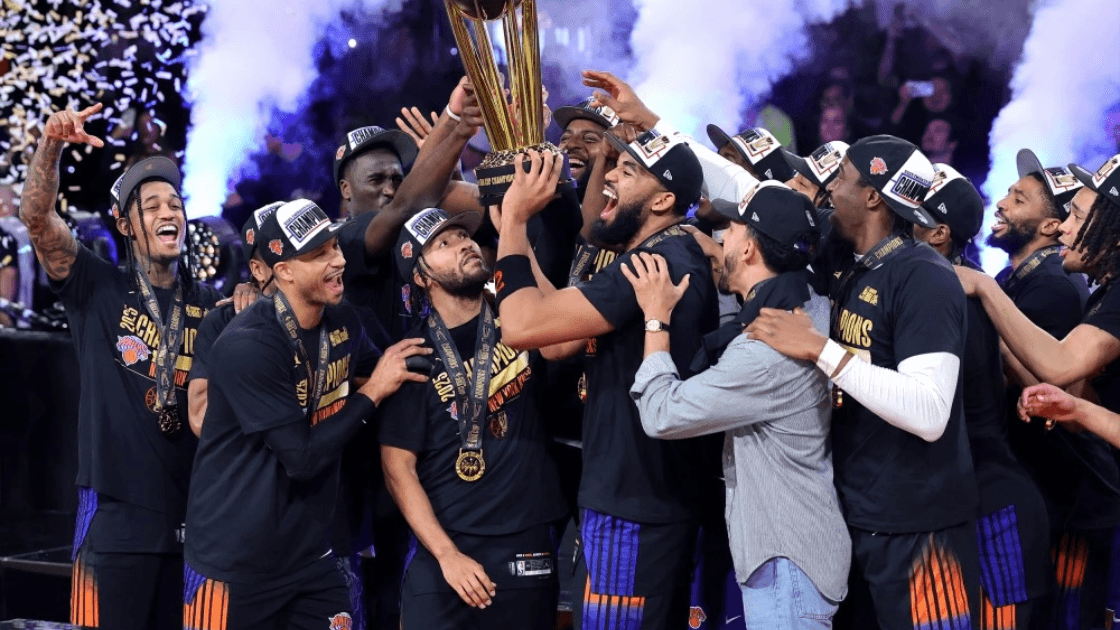
For the first time in 53 years, the New York Knicks are NBA champions! While Knicksanity has taken over the five boroughs and beyond, UpRising looks back at the massive imprint the franchise has left on TV and film — a footprint even bigger than Karl-Anthony Towns’ shoes. Peep this viewer guide from over the years.
__________ Film: Fast Break | ||
If you're looking for something else basketball-related, we suggested Winning Time (HBO). [TAKEN OUT OF CONTEXT] I was thinking about my past relationships with people I loved, and getting backstabbed, and still loving the person that backstabbed you. It all went into this project.From going hitting No. 1 on Billboard charts to working with Beyoncé, this guitar hero has had a past few years. But it hasn’t all been sweet. The music star is juggling some complicated feelings on his upcoming release. Take a look here to see who it is, then dive into how he plans on keeping his momentum going. Let's Link
[OUTRO] Take This Audio Doggie Bag With You
|