Uprising
How Jesse Jackson Fought for a New Hollywood
[MAIN EVENT]
The late civil rights legend demanded equality both on- and off-screen.
—————
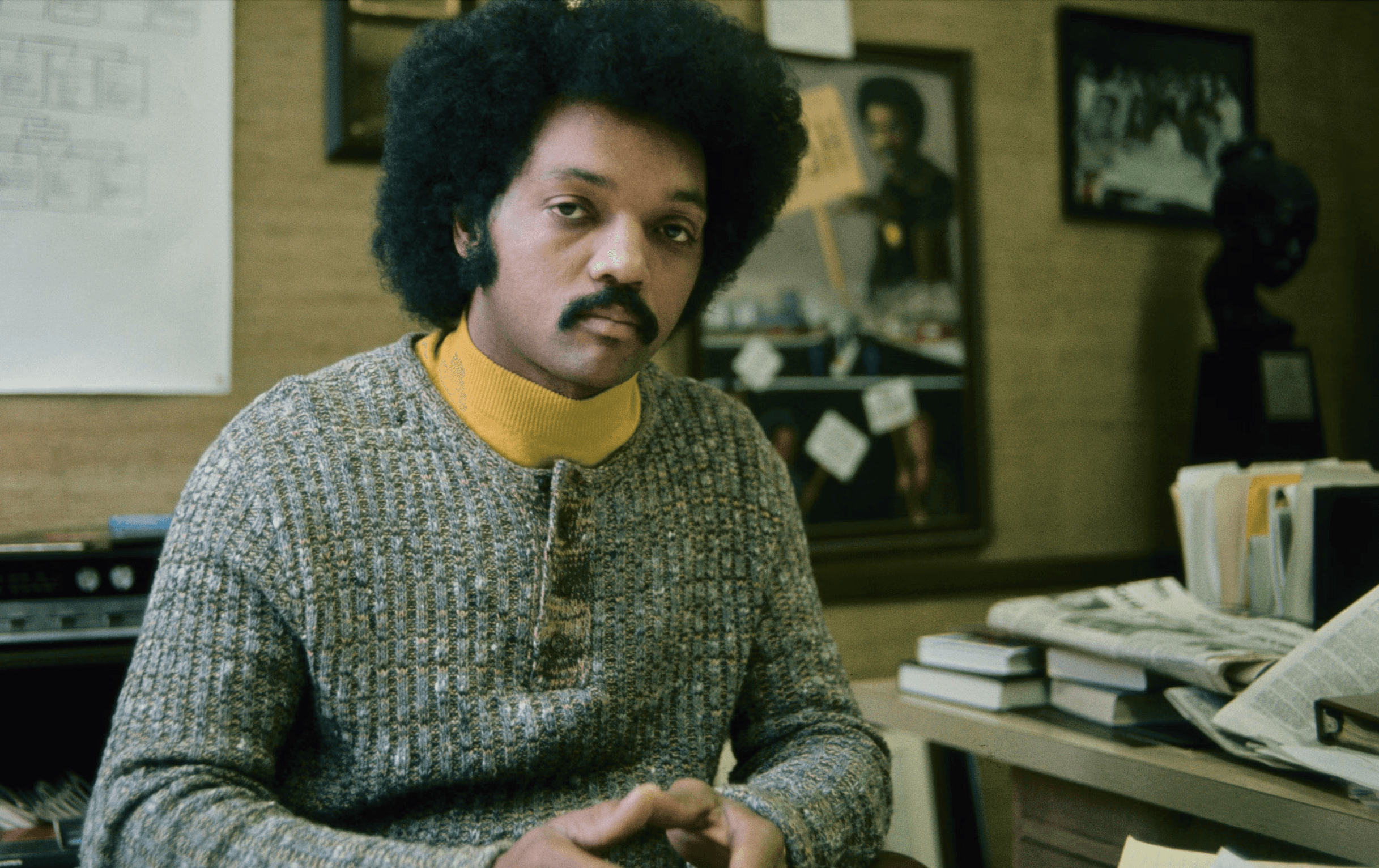
On Hollywood’s biggest night, when spotlights swept over the Dorothy Chandler Pavilion red carpet, and the industry congratulated itself for excellence, Jesse Jackson was prepared to disrupt the celebration.
His gripe was valid: Back in 1996, there was only one Black nominee at the 68th Academy Awards. Out of 166 nominees. One. [Dianne Houston received a Best Short Film (Live Action) nom for directing Tuesday Morning Ride, which starred Ruby Dee.] Jackson saw the jig. And he stood on business.
The civil rights legend, who died on Tuesday at 84, framed the snub as a systemic issue. He argued that Black actors were carrying films at the box office yet being snubbed come award season. This wasn’t a taste issue, he claimed. So he took action, mobilizing protests and garnering media attention around the exclusions.
“We are going to open up the consciousness of Hollywood,” Jackson said at the time, according to The Los Angeles Times. He stopped short of coordinating a widespread boycott. (Quincy Jones produced the ceremony that year, while Whoopi Goldberg hosted the festivities.) But the public pressure and symbolic disruption took the Academy to task. It set a precedent for the social media-driven #OscarsSoWhite movement two decades later.
Hollywood, in Jackson’s view, was not separate from the Civil Rights Movement. It was one of its front lines, and he fought on behalf of Black folks in show business.
In 1994, Jackson launched the Rainbow Coalition on Fairness in the Media as an extension of his Rainbow Coalition for social justice and economic equality. Through that organization, the North Carolina A&T alum met with studio executives and corporate leaders, demanding measurable commitments to hire more Black talent in writing rooms, casting departments, production crews, and executive suites.
Jackson threatened boycotts and urged studios to prioritize inclusion, arguing that Black stories are not only worthy of being told, but they also put butts in seats and remote controls in palms.
“They think they have the right to not include us in recruitment, hiring, promotion, projection, decision making,” Jackson said during a ’94 press conference. “But we have consumer power, we have viewer power, we have the power to change dials. ... The networks have time now to get their house in order. They can begin to change now.”
Jackson’s fight on behalf of Black Hollywood was rooted in the belief that cultural power translates into political and economic power. When Black actors are boxed into stereotypes or locked out of opportunity, the damage reverberates beyond the screen. (He also protested Soul Plane in 2004.)
By insisting that representation mattered—at casting calls, in boardrooms, and on award stages—Jackson helped lay the groundwork for the equity conversations that define Hollywood today.
In 2016, when #OscarsSoWhite was in full swing, Jackson shared his thoughts on the progress in an editorial published in USA Today. “The lack of diversity starts long before the stars pose and parade on the red carpet come Oscar night,” he wrote. “Open your eyes, Hollywood. It’s time to flip the script.”
—John Kennedy
____________________
[WRITER'S ROOM]
Lift Yourself
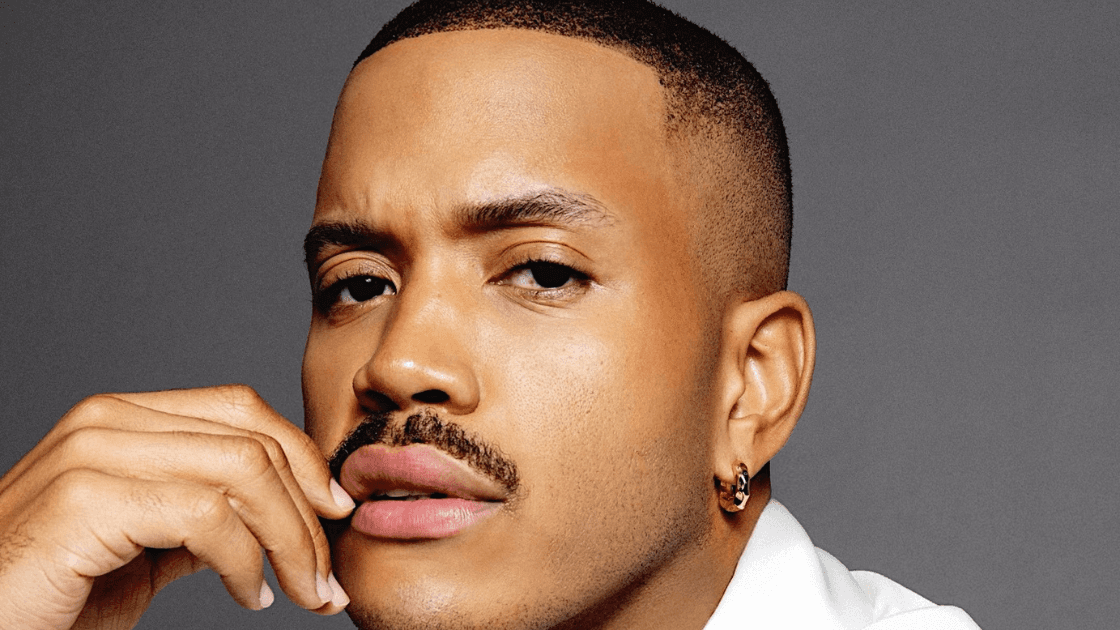
Writer-actor Cameron J. Ross opens up about crafting a middle-aged Black love story in the Lifetime drama Be Happy.
—————
In Mary J. Blige Presents: Be Happy, Tisha Campbell plays a 50-year-old mother and wife named Val whose happy home turns into an empty nest. Her marriage has gone cold like leftovers and as she seeks fulfillment in the second half of her life, she’s left asking herself a critical question: What now?
Written by Cameron J. Ross (who also plays Jacoby in a supporting role), the film follows Val to New Orleans as she takes space from her husband, Ross (Russell Hornsby), to rediscover herself and reawaken her passions. While there, she cozies up with Peter (Mekhi Phifer), finding herself in a love triangle with no clear direction forward.
The Houston-bred screenwriter says he was careful to avoid tropes, instead depicting nuanced Black folks grappling with the reality that working on marriage doesn’t end after vows are exchanged.
“I’m excited for the conversations that Black women will have with each other about what it means to continue to evolve personally within a relationship,” Ross told UpRising of the film, the latest in Blige’s creative partnership with Lifetime. “You don’t have to leave your relationship to grow.”
Ross speaks about the authentic, informed process of taking this story from the page to the screen.
***
On telling the stories of Black empty nesters
I grew up in Houston and went to college in New York. It wasn't until much later in my life that I started to see my mom as more of a human than a superhero. I thought, “What are mom and dad going to do now that I'm not there?” Even in single-parent households, [parents'] lives are consumed with [their children] until they [move out]. Do they go back to their prior life? What is the journey to get back to abandoned dreams and goals? I was really excited to explore that.
On taking direction from Gabourey Sidibe
She was such a phenomenal director when it came to motivation and conversations with us. And it was really cool for me, because although I wrote it, you have to take the writer hat off and be present as an actor. She brought ideas to the material that I didn't even think about.
I was impressed that she found connectivity within the script to support her vision. She was just so protective of the work, which meant the world to me. She's a new mother to these adorable twins. She said she looks at them and wonders what will happen when they grow up and leave.
On writing nuanced characters
I didn't want Black men to be tropes in this process of a woman's exploration, where it's just like: bad husband, she has an affair with a sexy man who then sweeps off her feet. I wanted the characters to feel fully realized. Mekhi and Russell do a phenomenal job; I'm such a fan of their work. They’re iconic, and they had some personal connectivity to the work that shows up on screen.
We see the evolution of Ross, who is beautifully played by Russell Hornsby. It was really important for me to create a male character who was like, “I'm gonna treat this with care and not give up on marriage.”
On assembling Black women’s focus groups to inform the script
There's only so much I—a thirtysomething Black man—could know without actually having conversations with women. So it was important for me to hold focus groups to get different perspectives on how it feels like to be a fifty-something woman who is either retired or has children out of the house. I focused on that more than on other films because I wanted to make sure it was grounded in reality and truth. I wanted women to watch it and see themselves.
I come from the theater, where plays and musicals go through workshopping. There are conversations and focus groups. Actors are involved, writers, directors—they all tap into personal experience. A Chorus Line, which at one point was one of the longest-running shows on Broadway, started in a focus group and became such an iconic hit. Michael Bennett, the writer and director, would hold focus groups with dancers where they would talk for hours about their experiences in the theater. When he created the show, so many people saw themselves.
I wanted that response from Black women, especially once they found out that I wrote it. I wanted them to feel protected, like someone gave a damn about their reality in a world that often feels like it doesn't.
—As told to John Kennedy
Be Happy is now streaming on Lifetime. You can watch the trailer here →
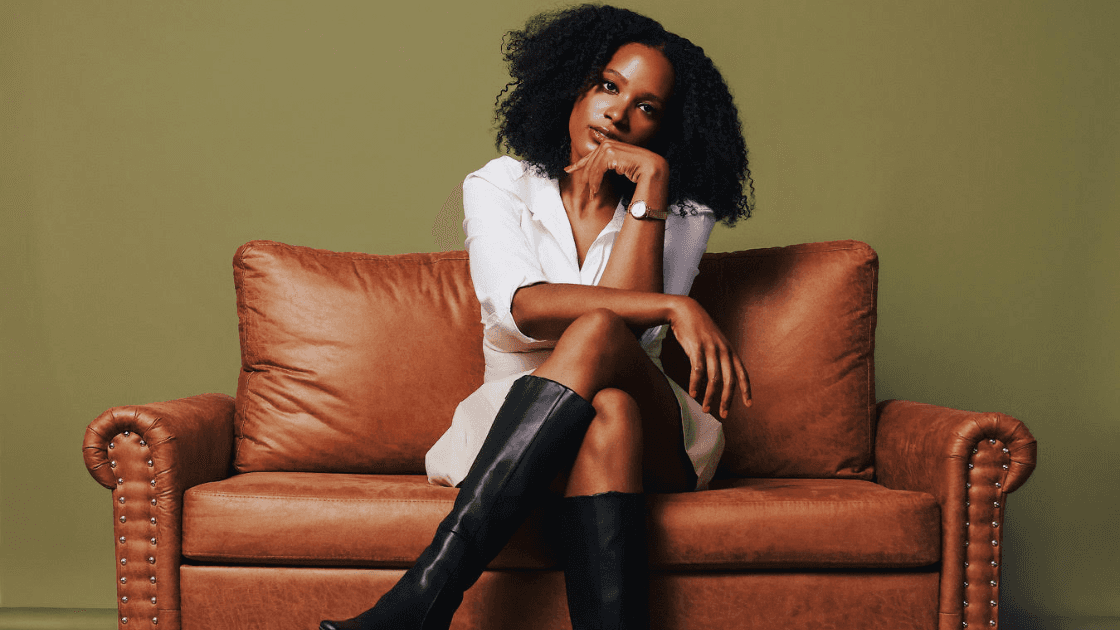
[INDEPENDENCE DAY]
The Rise of a New Awkward Black Girl
Cheyenne the Geek’s The Comic Shop YouTube Series centers the blerd culture that has long been a part of her life. Similar to what HBO did for Issa Rae’s Insecure, the hilarious writer-actor hopes networks see the potential and graduate her world of funny books.
—————
UpRising: What was the first comic you ever purchased?
Cheyenne the Geek: Batgirl of Burnside, because one of my favorite artists, Babs Tarr, was doing the art. That was the first comic that I ever purchased with my big girl money.
What drew you to her illustrations?
Excuse my language, but she has such a cunty way of drawing characters. Babs was really big in the Tumblr era, and so the moment I saw that she was doing art for comics, I was like, Okay, let me lock in.
You’re a life-long blerd. Is that how you came up with the concept for The Comic Shop?
Originally, I was writing a romantic comedy about a girl who wants to be a comic book writer who's working a corporate job. She had to decide between chasing her dreams or pleasing everyone in her life at this corporate job. She was also teaching kids how to draw comic book characters on the side as well. That was The Comic Shop before I knew it was The Comic Shop.
How did you end up pivoting?
Somewhere down the line, I realized I wanted to make a comedy, but I really liked these characters that I developed with this rom-com and I didn't want to get rid of them. So I just transferred them over to the idea of a show based in a comic book store. I haven't seen a scripted show like that before—at least not one that has faces like mine. That was lacking in a lot of nerd media. All the nerds I know are Black or people of color. I always wanted to see a group of friends that look like me participating in this world that I love so much.
On the show, your mom is not supportive of your comic venture. How do your real-life parents feel about the show?
The character Stephanie [that I play], her relationship with her mom is very similar to how my parents are. I am a first-generation Nigerian-American kid. If you've ever hung around any Nigerian-American kid, the struggle of pursuing a career outside of STEM or anything like that is real. My parents always wanted me to either get into the medical field or be a lawyer. And I was like, Well, I can't be a lawyer because I'm socially awkward. And the medical field kind of a snoozefest [laughs].
Your character is very alpha.
She's kind of a hater. That's one of the main comments that I hear people say about Stephanie throughout the whole series: that she is a Grade-A hater.
Her partner in the comic shop doesn't think she takes his business suggestions seriously, although I must say he's a bit whimsical.
Keith Hendrix is a character that's so familiar to me—the guy who thinks he's cool, but really he just does a little bit too[ much]. He embodies a lot of what I want to be. When Zeno Robinson was playing the character, he was also saying there's a lot of Keith that he would love to see in himself in real life. That character and Stephanie really balance each other out. Stephanie is hardheaded; she needed a partner who could soften her, see through all that, and call her out.
The tempo of your tone is remarkably similar to Issa Rae's. Has anyone ever told you that?
Yes, every day of my life. Any time I post a clip from The Comic Shop, there's always a comment saying, "She sounds like Issa." I'm flattered because I used to get bullied for the way I talk.
Is this your dream show? Or is there something else percolating?
I think my dream show would be to star and write a network version of The Comic Shop. But there was a show on the CW years ago called Powerless—it was a sitcom based within the DC Universe about people who don't have superpowers and what they have to go through living in a world that does. They need to bring that back. I want to be in the writer's room.
—Jermaine Hall
Watch The Comic Shop series here →
____________________
[LET'S LINK]
32 Overlooked Black TV Shows, From The Best Man: The Final Chapters to The 1619 Project [Variety]
“The World Under One Roof”: An Oral History of the Yeezy Season 3 Show [Complex]
From The Daily Show to Marvel, X Mayo is the Future of Latinas in Hollywood [Remezcla]
HBCU Bands Bring Big Sound to Mardi Gras Parades [Capital B]
Family Deepfakes Help People Celebrate and Grieve in India [Rest of World]
____________________
[TAKEN OUT OF CONTEXT]
"I don't want to blow up the spot... But I will say, he's working on a project, I believe, with Travis Scott and a few of my tracks have made the cut so far."
Havoc of Mobb Deep always seems to be cooking up some heat, and in a recent chat with Complex, he let it spill that he’s contributed to a confidential collab album between Travis Scott and another music heavyweight. You’ve gotta hit the link to find out who he’s talking about, and then get into an insightful retrospective feature.
____________________
[OUTRO]
Take This Audio Doggie Bag With You
“Good Flirts,” Baby Keem Featuring Kendrick Lamar and Momo Boyd
Baby Keem’s Ca$ino album has been a long time coming. And it’s finally arrived with a gem: a feature verse from his cousin and Hillbillies partner, Kendrick Lamar. On it, K-Dot interpolates Common’s 2000 track “The Light.” J. Cole did the same on his latest album, which dropped two weeks ago. Coincidence? You be the judge while rocking this midtempo bop.