Uprising
Documenting Allen Iverson's Hard Knock Life
[THE MAIN EVENT]
Director One9 speaks on capturing the legendary hooper and cultural icon in a new limited docuseries.
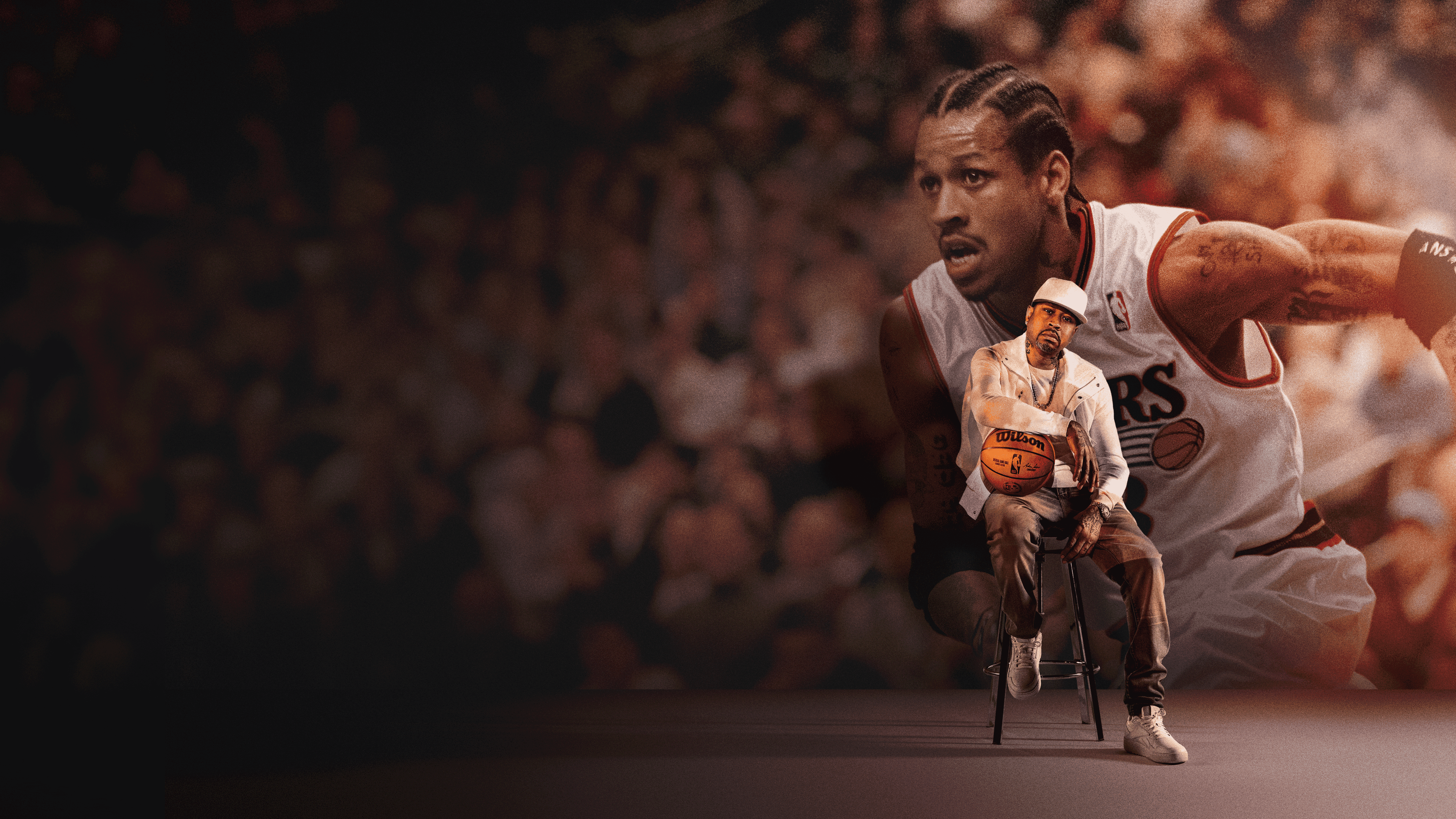
UpRising: Allen Iverson’s life and times have been well-documented over the years. What sets Allen Iv3rson apart from other documentaries?
One9: When I first sat down with Allen, I asked him, “Why do you want to do this?” He said, “Because I never got to speak my truth. Other docs were done without me or my family. They weren't my complete story.” Not to knock them — they all had validity for what they were — but I want to tell stories that are authorized by everyone involved. It all stems back from his origins in Hampton and Newport News. His family refused to let him fail and Allen sacrificed so much to make sure he lifted them. That became the heart of what I wanted to tell: a story about family, love, and perseverance.
Tell me about the process of making this docuseries. Was it a challenge to keep the story focused and concise?
This series took two years. Initially, it was just supposed to be a feature-length documentary, just an hour. I sent Amazon a four-hour rough cut. I wanted them to see everything we had. I didn't want to truncate this story. They supported the vision. They encouraged me to keep pressing and going deeper. As a filmmaker, that's all you want.
There's so much depth into a documentary, not just from a subject’s point of view, but from a filmmaker’s point of view. I'm inches away from feeling that emotion as I'm asking [questions]. You have to be cognizant of how to ask the next thing, how to capture it, knowing what might be too much. It's not easy. That responsibility is a heavy one.
There are several moments in the series where speakers, including AI, are emotional and tearful. How did you create a safe environment for everyone to open up on camera?
You have to read energy and read the room. One of the main interviews we did was in Newport News; we rented the community center where [AI] was honored with a street sign. I did Allen's interview earlier that day, almost three hours. Deep. After his interview, I'm interviewing his father, Michael Freeman. I hear the door open. It’s Allen. He’s like, “I just want to hear my daddy speak.” And I was like, “Why don't you sit next to him?” Then his mom and his sister come in. I had the whole family sit next to each other except for his mother, Ann, who wanted her own interview.
You see the emotional connections. His father said his favorite moment he had with Allen is when they had his sister, Brandy. You can see Allen going through his bond with his sisters, hearing things for the first time. That became the backbone of the story. I come from an editing background, so I understand how to hit emotion. That becomes a way that I tell stories. But I also try things along the way. So many documentaries [rely on] talking heads. I want to break the format up.
The archival home videos give an up-close look at Allen Iverson’s life from decades ago. What is the story behind that footage?
Allen made sure everybody who might’ve had [old videos] was connected to us. We reached out asking for photos. And you see a lot of the photos came in scrapbooks, cut up in home photo albums. We were very fortunate to find one of his Bethel High School teammates named Michael Jackson — they call him Thriller. He had the foresight to record a lot on video, so you see Allen holding his child up for the first time, him in his dorm room at Georgetown. He gave us a ton of that stuff. As filmmakers, we dig into the archives. Because we’re preserving, uplifting, and helping to curate this history. This becomes his museum, it just lives as a film.
After spending so much time on production, when did you know the film was done?
We'd been trying for a year and half to get his wife, Tawanna. I think she's really private. She just wasn't ready. [Allen] was just saying, “You got to get her.” But I can only do so much, so I was like, “You gotta get her.” We were about a year and a half in, maybe a month or two before the premiere. He calls me, like, “I got it, man.” We got a shooter, flew down, and made it happen in a few days. We knew the film wouldn’t be complete without her.
He watched the rough cut sitting next to me in the back of a theater with Amazon execs. I could feel his hand on my shoulder when he liked something. When he was emotional, I could hear him going through it. I remember him leaving the theater right after without saying anything. I was like, “Man, he hates it.” But he came back 20 minutes later, hugged me, and gave me a pound. He's like, “Of the three hours, I probably cried for two-and-a-half. I love it, man. Don't change a thing.” That's when I knew we had something special.
Your first film, 2014’s Time Is Illmatic, told the story of Nas’ early life. Did you see parallels between Nas and Allen Iverson as cultural figures and the way you told their stories?
Both are products of environments that shaped them, extremely violent and dangerous areas. Both have families with extreme love. They used their environments to catapult them. You're not scared of anything coming out of Queensbridge or Newport News. They both wear it as a badge. I look at the album Illmatic and I think of Allen Iverson: They're very similar in terms of being uncompromising, beautiful, poetic, and raw. And they both changed everything [that came] after.
You’re also working on a Nipsey Hussle documentary. Why did his story appeal to you?
The Nipsey Hussle doc is a series I'm doing with Nipsey's family. Most importantly, his brother, Sam. We've been working on it off and on. It'll be done when it's the right time. We want to honor his legacy the right way. We have everybody that's been involved in Nipsey's life in it: his family, friends, people in the music world. It's a very deep, personal story. There's so much archival family footage in there from early childhood. I want to tell stories of identity, how people changed the existing paradigm, how they endured things, and how they disrupted and became iconic in their own way. It's so raw, honest, beautiful, and powerful — just like the Allen series. It'll really shake people up.
• • • • •
The three-part documentary series Allen Iv3rson is available to stream on Prime Video.
________________
[ONE-MINUTE PITCH]
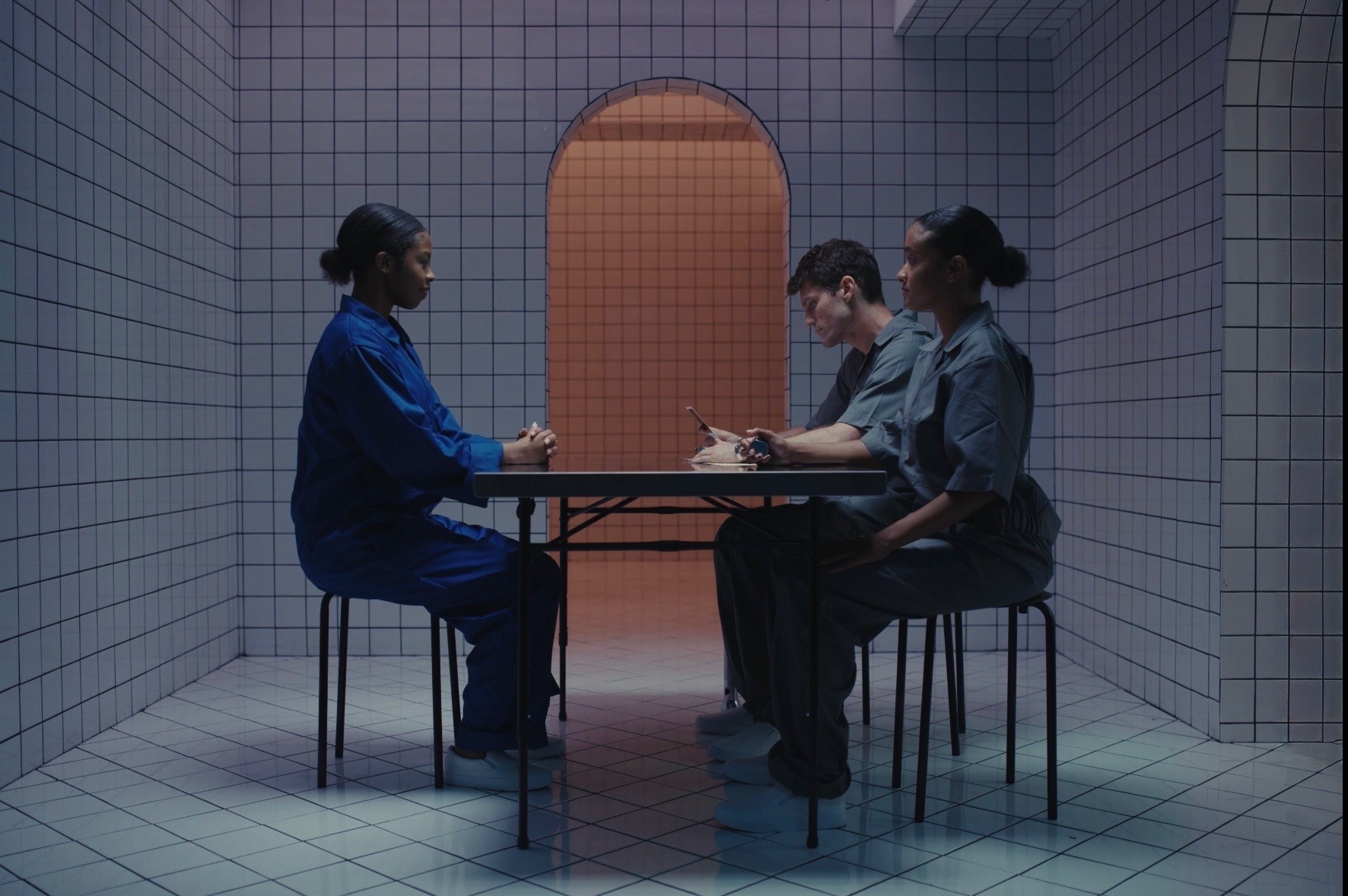
When Disaster Strikes
The chilling dystopian short Where the Children Go to Play imagines a distant future where bots are in charge. Director Jada George speaks on its inspiration and message.
• • • • •
Where the Children Go to Play takes us into the future and poses the question: What happens when the technology that's created to help us ends up controlling us? With AI, we're watching how fast it's evolving and trying to keep up. How far are we going to take this?
We’re inputting our knowledge and questions into ChatGPT. Some people use it for therapy, feeding it these human stories. Where the Children Go to Play is a tale of artificially intelligent bots believing they could handle Earth better than humans can given what people have shown — the violence, the state of politics. Like, “Now you guys answer to us.” And humans have to bow down. The lingering question is, what's the bots’ motivation? Who's to say their ideas are right?
I'm hoping the film makes people look at how much energy we're giving to this technology and realize how far it's pulling us from each other. Hopefully, it'll wake us up to realize community is what makes us human.
Black Mirror was a major influence* — it introduces things that seem far-fetched, but when you really sit with it, you realize it's not so distant or impossible. I want Where the Children Go to Play to scare you, to make you feel uneasy, to make you think about where we're going as a society and how we can start course correcting right now rather than waiting until it’s too late.
—As told to John Kennedy
• • • • •
Where the Children Go to Play hits on reproductive rights, eugenics, and the AI revolution — all in an eerie 15-minute short. It’s now working the festival circuit; watch the trailer here.
*The Black Mirror Episode That Influenced Her Film: Season 3, Episode 1: "Nosedive"
Jada George says: "In this episode, social media status determines worthiness. How many friends and likes you have will unlock opportunities no matter how good or bad a person is morally. Where The Children Go To Play takes this concept a step further by personifying AI."
________________
[TAKEN OUT OF CONTEXT]

I’m just in a transition period where I’m leveling into a new section of who I am as a person. And that requires whatever the f**k this weird-ass vibe is right now inside.
This musical superstar made a mark on the culture this year without dropping an album. But they’re continuing to grow and flourish — even if it’s sometimes uncomfortable. Peep this profile to see who it is and hear all about their wild 2025.
________________
[LET'S LINK]
Chris Brown’s Manager on What’s Next After Stadium Tour and Grammy Buzz [Billboard]
With the “Legend Has It” Series, Mass Appeal and Nas Are Betting Big on Hip-Hop [Andscape]
Frankie Quiñones Turns Sobriety & Struggle Into Stand-Up Gold[Remezcla]
Cassandra Freeman on Art, Janet Hubert’s Influence, and the Final Season of Bel-Air [Essence]
Why Are Young Men Embracing the Quarter-Zip Lifestyle? [The New York Times]
________________
[OUTRO]

Take This Audio Doggie Bag With You
“Watching Us,” Wale Feat. Leon Thomas
Wale’s new album is one of the year’s best — and this ode to romance in the public eye is one of many standouts. Get into this rap/R&B bop, supercharged by a sample of Goapele’s classic song “Closer."