Uprising
Tyree Dillihay Is Goated!
UpRising: GOAT focuses on Will Harris (voiced by Caleb McLaughlin), a relatively small goat chasing a dream that others tell him is unrealistic. What was it about the storyline that hooked you as a director?
Tyree Dillihay: When you're a kid, it seems like dreaming big is impossible. It's almost like you need permission to do it. It's good to have a family, friends, a support system, a community of people that say, “You can be so much more. You're bigger than your circumstance. It's heart over height.” These are real tenets of an underdog, and we wanted to put that on the big screen because that's a positive message that we really need in the world. When you see the film and experience it on an emotional level, it's like a Trojan horse.
That goes even more so for kids who look like us, coming up in a world that dictates their limitations.
Exactly. I was one of those children. My mother and my grandparents put that battery in my back. I'm from Inglewood. If you stand on Manchester and Fifth Avenue and look north, you can see the Hollywood sign. It made me dream bigger. My mother explained that's where movies are made, and here we are [coughs] years later.
Stephen Curry (GOAT voice actor and producer) has talked about wanting the film to be rooted in sports culture. How did that world-building show up in the creative process?
The sports culture and DNA are all throughout the film. We wanted the audience to feel the authenticity, to treat roarball as a real sport. So we took the foundation of NBA basketball and exaggerated it. It's got real basketball rules, but now you add the animal aspect to it. The most important thing, emotionally, is the intensity factor. You want to put yourself in Will's shoes and wonder how he’s going to survive with these bigger animals to ultimately change the game. It's really [reminiscent] of Steph’s story; we try to infuse that in the film.
You’ve spoken about experimenting with frame rates to give action shots a unique feel that depicts that intensity. Can you share how that came into play and what the payoff will be for viewers?
I gotta shout out Daniel Pozo, head of character animation at Sony Imageworks. The team over there is world-class. That was just a conversation about what we wanted to achieve. When you look at sakuga-style animation—for all the nerds out there, I’m one of them—it really emphasizes strong key poses that hit viewers in the face. They're exaggerated. When you put it with a limited frame rate, those poses stay on the screen longer for a more visual impact, just floating from frame to frame. Techniques like that have been used in other films, but I think Sony Pictures Animation and Imageworks are the pioneers. We push things, and our artists are up for the challenge.
Are there any other progressive choices—visually or otherwise—that you employed in GOAT?
When you look at the world-building, it just feels so lush, lived in, and familiar. We didn't go too alien. We kept things grounded. In terms of the art feel, we treated things with an impressionistic brush—not being overly detailed, letting the viewer fill in some information on their own so they can participate and be a part of the world. I think that helps with the immersive quality of it all.
For someone coming up in the film industry who wants to follow in your footsteps, what is one piece of advice you would share?
Dream big, and don't wait for permission. You have all the tools at your disposal right now to get to work. [The smartphone] has changed the world; we could argue for the better. In the hands of real creatives and artists, there should be no limitations at this point. YouTube is free. There are lots of DIY opportunities. Get with like-minded people and start making stuff happen. Get busy.
Speaking of modern technological advances, how has artificial intelligence impacted animated film production?
At Sony Pictures, we use traditional means of creating our works, so AI has had no impact personally. But I see what it's doing to the industry. All I can offer is that the industry is changing rapidly; it would be good to adapt.
—John Kennedy
GOAT stars Caleb McLaughlin, Gabrielle Union, Stephen Curry, Aaron Pierre, and Jenifer Lewis. The film hits theaters on Feb. 13.
——————————
[DIRECTOR'S CUT]
The Incredible Story of the Man Who Helped Birth the Black Is Beautiful Movement
Black Is Beautiful: The Kwame Brathwaite Story chronicles a little-known photographer whose work fueled and documented a global Afrocentric movement. Director Yemi Bamiro opens up about shining a light on Kwame Brathwaite’s unbelievable life and times.
—————
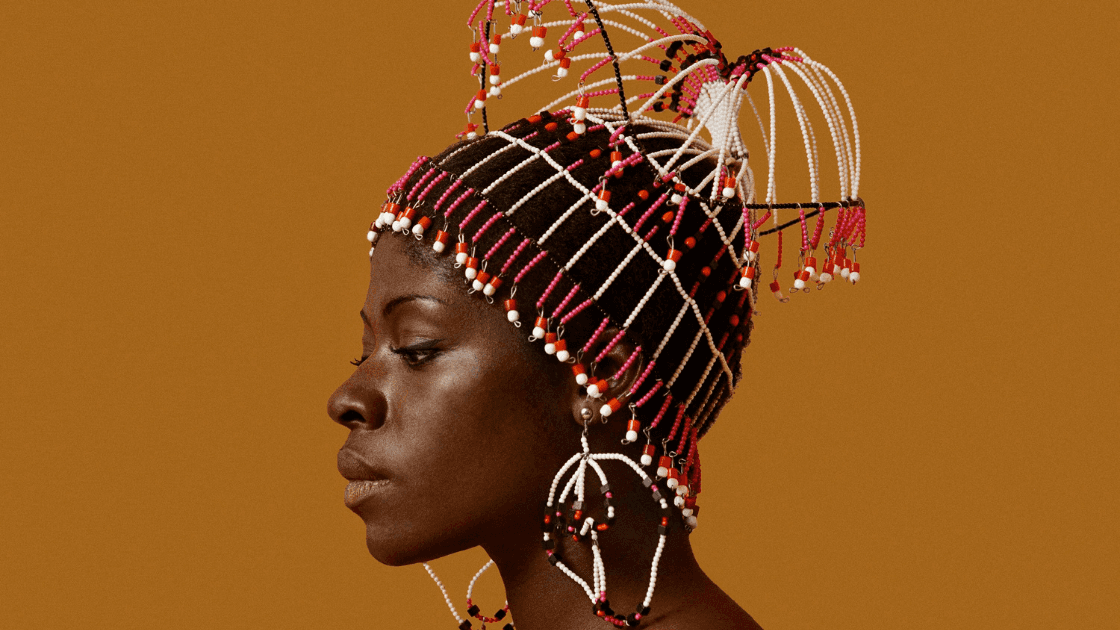
Before “Black is beautiful” became a slogan, a hashtag, or a marketing strategy, it was a declaration. The originator of those three powerful words is Kwame Brathwaite, a Harlem-based photographer whose images helped redefine how Black folks saw themselves. The late activist and cultural architect used his lens to celebrate dark skin, natural hair, and African aesthetics as acts of resistance and pride, with an influence that dates back to the 1950s.
Brathwaite rubbed shoulders with Muhammad Ali, Bob Marley, and the Jackson 5. He co-founded the African Jazz-Art Society & Studios and the Grandassa Models, helping the latter become icons. And he documented liberation struggles in Southern Africa. The upcoming documentary Black Is Beautiful: The Kwame Brathwaite Story chronicles that rich legacy, bringing overdue attention to a figure whose influence is ubiquitous, even if his name isn’t. UpRising spoke with the director Yemi Bamiro about bringing this hidden figure to the forefront.
On recreating Kwame Brathwaite’s visual aesthetic
We worked really hard on that. We didn't want too much of a departure from his photography, so we were really conscious about shooting people in locations that could have been a set that Kwame would’ve shot his subjects on. Places that felt like a throwback. We wanted very earthy tones: browns, dark greens. Nothing too cold or contemporary. We wanted that to be seamless.
[Jean-Louis Schuller], the film’s director of photography, set the look. And everybody was committed to it. Everybody understood this was an amazing story and felt lucky to tell it. We had an amazing colorist, Jason Wallis of Electric Theatre Collective in London. I remember when I saw the first pass, I was like, “My God, all the colors are so rich!” It was so much fun, because you don't get to make films like this every day. We tried to be as thorough and alive to the process as possible.
On Alicia Keys and Kasseem “Swizz Beatz” Dean’s involvement as executive producers
The work that they do in the arts—particularly Black art—is incredible. Swizz and Alicia have [several] pieces of Kwame's work. Those pieces mean a lot to them, and Kwame Jr. has known them for a long time, so it made sense that they were part of the film. They were happy to support this endeavor because they're deeply passionate about the work.
On post-production challenges
One of the biggest challenges was the fact that this could have been a four-part mini-series, with hour-and-a-half episodes. That's how extensive Kwame’s life was. The challenge was cutting this into a compelling 97-minute feature film. There’s so much material on his life. And then the archive—he took more than half a million pictures. How do you grapple with that? Also, the archive is living and breathing. The family is discovering new stuff all the time, so we don’t know exactly what those 500,000 pictures are. It was a challenge to understand what exists and how we could use it.
On documenting Kwame Brathwaite as a historic figure while conveying his humanity
We always knew there would be this duality in the film of documenting what he did and the struggles he had to balance. Because he was away [from home] a lot. [His daughter-in-law] Robynn refers to him as Forrest Gump, because he was everywhere. But he was also a father who had a partner. His family supported the quest for purpose.
Otto Burnham, the film’s editor, is an incredible storyteller. We were in edit for a long time, and we would stress-test this stuff, like, “How can we speak to the fact that he was this normal guy that had all of these things that he was balancing?” It was very conscious, but all of these amazing stories came through the interviews and conversations with Kwame Jr., Robynn, and Sokolo, Kwame's wife.
—As told to John Kennedy
Black Is Beautiful: The Kwame Brathwaite Story is screening in Los Angeles at the The Pan African Film & Arts Festival on Feb. 17 and Feb. 19.
——————————
[TAKEN OUT OF CONTEXT]
I’d like to thank Warner Bros. for making me do this god-awful, piece of s**t movie.
This Hollywood legend has an Oscar and a Razzie in her trophy case—and she’s grateful for both. Click here to fill in the blanks and get a life update in this comprehensive cover story.
——————————
[LET'S LINK]
Ricky Martin Writes Open Letter to Bad Bunny After Grammy Victory: ‘You Won By Staying True to Puerto Rico’ [Billboard]
The Great Ticket Crisis: How Attending Live Events Became a Luxury Sport [GQ]
“What Is Yours Won’t Miss You”: Eve Receives Grammy for “You Got Me,” 26 Years Later [Los Angeles Times]
The Bizarre Story Behind the World's Most Expensive Album [The Washington Post]
A Mexican Couple in California Plans to Self-Deport—And Leave Their Kids Behind [The New Yorker]
——————————
[OUTRO]
Take This Audio Doggie Bag With You
“WHO TF IZ U,” J. Cole
Jermaine Cole did it. The Fall-Off—believed to be J. Cole’s final album—is here. And it’s heat. The conceptual double disc covers ego and peace, love and lust, youth and maturity. You should really give the whole project (24 tracks!) a listen, but here’s an early standout: a lyrical workout rapped over a sample of Mobb Deep’s 1996 classic “Drop a Gem on ‘Em.” Nothing can prepare you for the beat switch!